
Cyprus
Last updated: 4 April 2026
At a glance
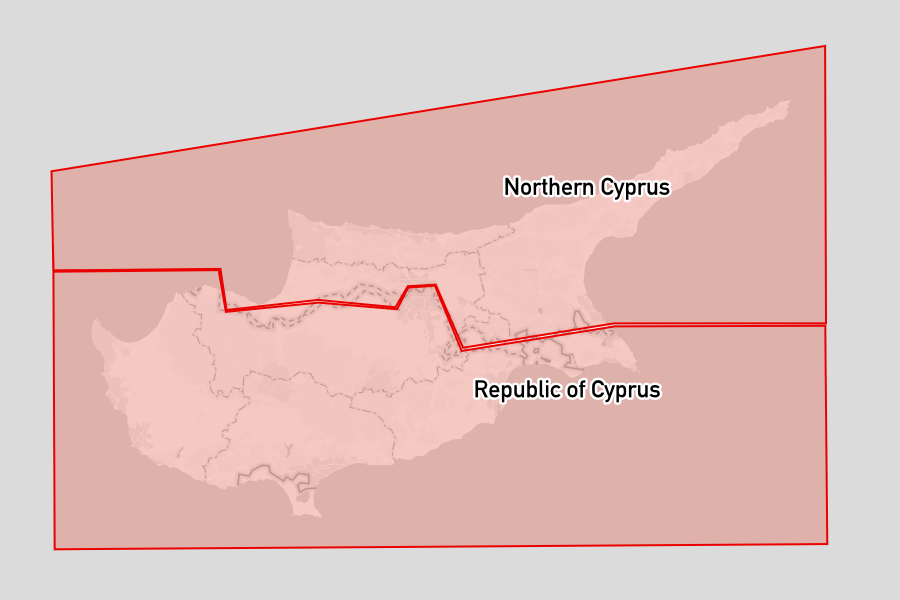
Cyprus is the third-largest island in the Mediterranean. It is politically divided between the Republic of Cyprus in the south and the Turkish Republic of Northern Cyprus in the north. The Republic of Cyprus holds the bulk of the island's yachting infrastructure; the north has more limited facilities and operates under a separate administrative and legal framework. A UN-monitored buffer zone separates the two areas.
Explore sailing areas
Our sailing area guides contain the most useful information for cruisers, including top-rated places to stay, attractions, yacht services, and summaries of yacht clearance experiences.
Yacht clearance and notes for mariners
See the relevant sailing area page above for details.
The off-season
Marinas in southern Cyprus have good facilities for storing boats in the winter. Liveaboard sailors in the Mediterranean tend to gather in sociable winter marinas. Some nearby options for Cyprus include Marina Aghios Nikolaos in Crete and Ece Saray Marina in Fethiye, Turkey.
Facts for visitors
- Best times of year to sail here: April to November
- Most common type of shore power: 230V 50Hz
- Cost for provisioning: Medium
- Currency: Euro (EUR) in the south; Turkish Lira (TRY) in the north
- Personal security: Generally considered safe; normal precautions apply in urban areas
- Emergency phone numbers:
- Police: 199 (south); 155 (north)
- Ambulance: 199 (south); 112 (north)
- Fire: 199
- General emergency: 112
- International dialing code: +357 (south); +90 392 (north)
- Time zone(s): UTC+2 (UTC+3 during daylight saving, late March to late October)
Maritime history
Cyprus has sat at the crossroads of eastern Mediterranean trade and naval power for centuries. Its copper deposits, which gave the island its name (from Greek Kypros), drove commerce with Egypt, the Levant (the eastern Mediterranean coastal region that served as the primary gateway for trade routes from Asia and the Middle East), and the Aegean from the Bronze Age onward, and its harbours attracted successive colonial powers seeking control of the region's sea lanes. Phoenician, Greek, Persian, Roman, and Byzantine rule each left a mark on the island's ports and coastal settlements.
The medieval period brought rapid changes of ownership, each driven by the island's value as a base for eastern Mediterranean naval operations. The Crusades drew Richard I of England, who seized Cyprus before selling it on; it passed through the Knights Templar to the Lusignan dynasty and eventually to Venice, which held it as a forward post for Levantine trade until the Ottomans took control in the late sixteenth century. Three centuries of Ottoman rule followed before Britain assumed administration and later annexed the island outright at the start of the First World War, motivated by its position on routes to the Suez Canal and the eastern Mediterranean.
Cyprus gained independence in 1960, but intercommunal tension between the Greek Cypriot majority and Turkish Cypriot minority led to a UN peacekeeping deployment four years later. A coup in 1974 seeking union with Greece prompted a Turkish military intervention and the occupation of the northern third of the island, displacing large numbers of people on both sides. The resulting division hardened into the political situation that exists today, with a UN buffer zone bisecting the island and reunification efforts so far unresolved.